

Does Ceramic Tint Help Your AC Work Better in Summer Heat? A Boca Raton Driver's Guide
Anyone who has gotten into a car parked in a Boca Raton parking lot on a July afternoon knows the routine: blast the AC on full, wait several minutes for the interior to become tolerable, and then ease it back down — or not, because the cabin just keeps cooking from the sun beating through every window. For drivers in South Florida, this isn't an occasional inconvenience. It's a daily reality that puts real strain on your vehicle's air conditioning system, your fuel budget, and your comfort from May straight through October.
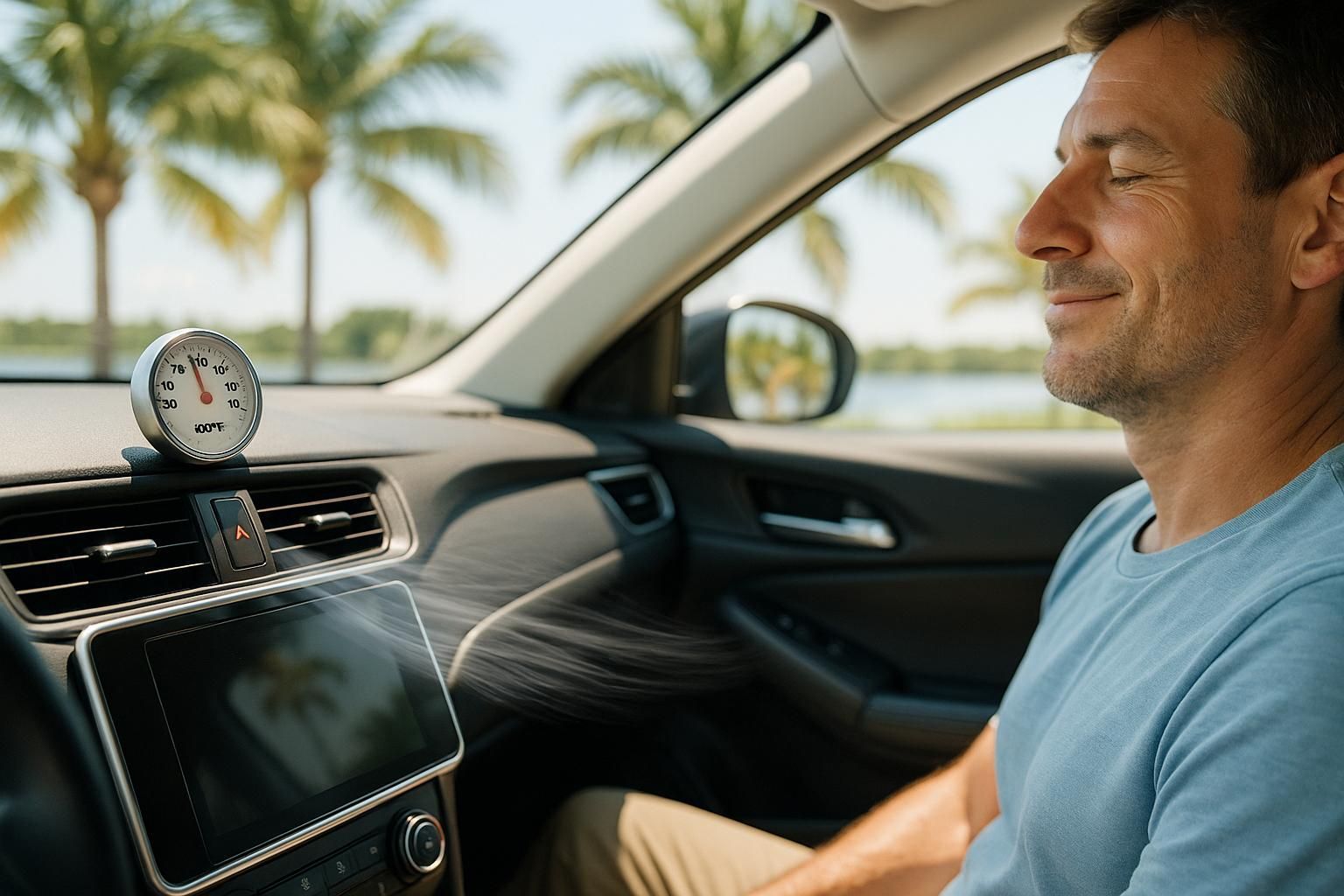
So when drivers start researching ceramic window tint, one of the most common questions that comes up is whether it actually makes a difference for the AC — not just a marginal one, but a meaningful, noticeable improvement. The short answer is yes. High-quality ceramic tint like FormulaOne's premium film lines, installed by Boca Tint & Audio, is specifically engineered to provide maximum heat rejection, which directly reduces the temperature your AC has to fight against. Less heat entering the cabin means the air conditioning doesn't have to work as hard or as long, which translates to a more comfortable ride and real-world fuel savings.
But there's important nuance in how this works, how much of a difference it makes, what separates ceramic from cheaper film types, and whether the upgrade is worth it in the Florida climate. This guide walks through all of it for Boca Raton drivers and homeowners in Pompano Beach, Deerfield Beach, Delray Beach, Fort Lauderdale, Boynton Beach, Lake Worth, and surrounding Palm Beach and Broward County communities.
Why Florida Summer Heat Is So Hard on Your Car's AC
Understanding why ceramic tint helps the AC starts with understanding what the AC is actually fighting in the first place.
When your car sits in direct Florida sun, solar radiation passes through the glass and heats everything inside — the seats, dashboard, steering wheel, headliner, and the air itself. Automotive glass, particularly untinted glass, allows a large portion of the sun's total solar energy to pass through relatively unimpeded. By the time you get back to a parked car mid-afternoon, interior surface temperatures can climb past 150°F on dashboard surfaces and well above 100°F in the cabin air. That thermal load doesn't disappear the moment you turn on the AC — your system has to first cool all of those superheated surfaces and air before the interior reaches a comfortable temperature.
Once you're driving, the problem continues. Direct sun through side windows and the rear glass keeps adding heat to the interior even while the AC runs. That means the compressor has to cycle more frequently, run longer, and work harder just to maintain a comfortable temperature — especially during slow traffic in the midday Boca Raton heat when airflow is minimal. The increased AC load adds strain to the engine and burns additional fuel, which is a daily cost that compounds across months of Florida driving.
This is the precise problem ceramic window tint is designed to address at its source, before the heat gets into the cabin at all.
How Ceramic Tint Reduces Heat Load in Your Vehicle
Ceramic window film works by blocking a significant portion of the sun's solar energy before it penetrates the glass. Unlike dye-based tints that simply absorb some light or metalized films that reflect certain wavelengths, advanced ceramic tint — including FormulaOne's Stratos, Pinnacle, Comfort, and Classic series — uses nano-ceramic technology to selectively control which solar energy passes through the glass.
The three components of solar radiation that contribute to heat buildup are ultraviolet light, visible light, and near-infrared radiation (NIR). NIR is particularly important to the heat question because it accounts for a large portion of the solar heat gain inside a vehicle even though it's invisible to the eye. Basic tints that address only visible light or UV don't fully address NIR, which is why a car can still get extremely hot behind darker dye-based film. Ceramic technology can block meaningful amounts of NIR along with UV, producing substantially greater total heat rejection than comparable dye films.
The practical outcome is that ceramic tint reduces interior surface temperatures — dashboards, seats, and door panels stay meaningfully cooler when the car is parked and while driving. When the interior is cooler to begin with, the AC has a smaller temperature gap to close and can reach comfort faster with less output.
Does Ceramic Tint Actually Help Your AC Run Less?
This is the core question most Boca Raton drivers want answered practically, not theoretically. The answer is yes, and here's the chain of cause and effect that explains why:
- Ceramic tint blocks a significant portion of the solar energy that would otherwise enter through the glass and heat the cabin
- A cooler starting cabin temperature means the AC compressor reaches the target temperature faster and cycles off sooner
- During driving, reduced solar heat gain through the windows means the AC can maintain comfort without running at maximum output as consistently
- Lower AC demand reduces compressor engagement, which reduces the load on the engine
- Less engine load from the AC compressor translates to improved fuel efficiency — an effect that is more pronounced in stop-and-go traffic typical of South Florida roads
The impact is most pronounced during the initial cool-down after a vehicle has been parked in direct sun. Without tint, the AC has to fight the full thermal mass of a superheated interior. With high-performance ceramic tint, that thermal mass is substantially lower from the start, and the cool-down happens meaningfully faster.
For daily drivers in Boca Raton, Delray Beach, Pompano Beach, and surrounding areas who park outdoors regularly — at offices, shopping centers, beach parking, or residential driveways — this is a benefit that compounds over hundreds of driving days per year.
Ceramic vs. Standard Tint: How Heat Rejection Compares
Not all window tint provides meaningful heat reduction. This is one of the most important distinctions to understand when comparing options, because the category of "window tint" ranges from decorative dye films with limited solar performance to advanced nano-ceramic technology that rejects a substantial portion of total solar energy.
| Film Type | UV Rejection | Infrared / Heat Rejection | AC Relief | Signal Interference |
|---|---|---|---|---|
| Dye-Based (basic) | Moderate | Low | Minimal | None |
| Metalized | High UV | Moderate heat | Some | Can interfere with GPS/radio |
| Ceramic — FormulaOne Comfort / Classic | 99%+ UV | Good | Noticeable improvement | None |
| Ceramic — FormulaOne Stratos / Pinnacle | 99%+ UV | Maximum heat rejection | Greatest AC benefit | None |
| FormulaOne AIR Series (clear) | 99%+ UV | Good | Noticeable improvement | None |
FormulaOne's film lineup at Boca Tint & Audio covers the full range — from the Stratos and Pinnacle series representing top-tier ceramic performance, to the Comfort, Classic, and AIR series for drivers who want UV and heat control with lighter or virtually invisible film. Even the AIR series, which is designed to be nearly transparent, still delivers strong heat and UV rejection through the same nano-ceramic platform, which matters for drivers near Florida's front windshield tint limits or those who simply prefer a clear appearance.
The key advantage of non-metallic ceramic technology beyond heat performance is that it doesn't interfere with electronics. Metalized films can disrupt GPS navigation, cell reception, and radar detectors — a real concern for Boca Raton drivers who rely on these systems. Ceramic film avoids this issue entirely.
What "Maximum Heat Rejection" Means in a Florida Summer
FormulaOne's product positioning specifically emphasizes maximum heat rejection as a core engineering goal, and understanding what that means in practical South Florida terms helps clarify the value.
Florida's summer sun is intense because of both the angle and duration of direct solar exposure. Boca Raton sits at approximately 26 degrees latitude, putting it close to the Tropic of Cancer and delivering near-overhead sun angles for much of the year. Vehicles here don't get the oblique, lower-angle sun of northern states that significantly reduces the intensity hitting roof, hood, and window glass. The solar energy load on a parked or moving vehicle in South Florida is simply higher and longer-lasting than in most other parts of the country.
In that context, the difference between a film that rejects moderate amounts of solar energy and one engineered for maximum heat rejection is larger than it would be in a milder climate. Every percentage point of additional solar energy blocked by the film is a percentage point the AC doesn't have to compensate for. Over a full Florida summer, that efficiency gap is substantial — both in comfort terms and in the wear on the AC system and compressor over years of operation.
The AC Benefit Applies to Homes and Businesses Too
While most people think of the AC-and-tint question in the context of vehicles, the same physics applies to residential and commercial buildings — and in some ways, even more dramatically.
Boca Tint & Audio installs Vista residential and commercial window film for homes and businesses across Boca Raton, Boynton Beach, Deerfield Beach, Coral Springs, and surrounding communities. LLumar residential window film rejects up to 79 percent of solar energy, which means the heat load on south- and west-facing rooms is dramatically reduced. For Florida homeowners, that translates to AC systems that cycle less aggressively during peak afternoon heat, more consistent temperatures between rooms, and lower monthly energy bills.
On the commercial side, the energy savings are particularly meaningful for office buildings with large glass window walls — a common architectural feature in South Florida commercial real estate. Reducing solar heat gain through those windows cuts cooling costs, which average savings of roughly 5 to 15 percent on a building's energy costs according to what Boca Tint & Audio notes for their commercial film installations. That figure compounds month after month across the full cooling season, which in Boca Raton runs most of the year.
Is Ceramic Tint Worth It for the AC Benefit Alone?
Ceramic tint costs more upfront than dye-based alternatives, and that's the typical hesitation. But when you frame the investment around the ongoing value — not just the one-time cost — the calculation usually shifts in favor of ceramic, particularly in a South Florida climate.
Consider what ceramic tint actually delivers on the AC question specifically:
- A cooler cabin means less time and fuel spent on the initial cool-down every time you get in
- Reduced AC compressor cycling over thousands of driving days extends the life of the system
- Better fuel efficiency from lower AC load adds up across months and years of daily driving
- More consistent comfort without running the AC at maximum output
Beyond the AC benefit, the same film also blocks more than 99% of UV radiation — protecting both occupant skin and the vehicle's interior from fading, cracking, and deterioration. It enhances the vehicle's appearance, provides privacy, and on FormulaOne products installed by Boca Tint & Audio, is backed by a lifetime limited warranty against color change, bubbling, and cracking for as long as you own the vehicle.
When you add those benefits together against the higher upfront cost, the value argument for ceramic over cheaper alternatives becomes clear — especially in a market like Boca Raton, where vehicles face Florida sun essentially year-round rather than for a few summer months.
Frequently Asked Questions
Does ceramic tint actually make a car cooler inside?
Yes, measurably so. Ceramic tint blocks a significant portion of total solar energy before it enters the cabin, which reduces interior surface temperatures on seats, dashboards, and door panels. The car is meaningfully cooler when you first get in, and stays more comfortable during driving with less AC output required.
How much does ceramic tint help with fuel efficiency?
The fuel savings from reduced AC load vary based on driving patterns, vehicle size, and how much time is spent in direct sun, but the principle is consistent: less AC compressor engagement means lower engine load and better fuel economy. The benefit is most pronounced during stop-and-go driving in hot conditions, which is a common scenario in South Florida.
Is ceramic tint better than regular tint for heat in Florida?
Significantly better. Dye-based films absorb some light but offer limited total solar rejection and decline in performance over time. Ceramic film using nano-ceramic technology blocks across a broader spectrum of solar energy — including near-infrared radiation — and maintains that performance consistently without degrading. For the Florida climate specifically, the difference in heat rejection is substantial.
Does ceramic tint interfere with GPS or cell phone signals?
Yes. FormulaOne's AIR series and lighter ceramic films still deliver strong heat and UV rejection even though they appear nearly transparent. The ceramic nanoparticle technology works independently of how much visible light the film allows through, so you can get real thermal benefits while staying within Florida's legal front window tint limits.
Does clear or light ceramic tint still help with heat and AC?
Yes. FormulaOne's AIR series and lighter ceramic films still deliver strong heat and UV rejection even though they appear nearly transparent. The ceramic nanoparticle technology works independently of how much visible light the film allows through, so you can get real thermal benefits while staying within Florida's legal front window tint limits.
Does window film help home AC bills in Boca Raton?
Meaningfully, yes. Residential film like Vista, installed by Boca Tint & Audio, rejects up to 79% of solar energy coming through home windows. This reduces the heat load on south- and west-facing rooms, allowing AC systems to run more efficiently. Commercial window film typically shows energy savings of roughly 5 to 15% on a building's overall cooling costs.
The Bottom Line for Boca Raton Drivers and Homeowners
Ceramic window tint absolutely helps your AC work better in summer heat — not as a side benefit, but as a direct result of its core engineering. By blocking a substantial portion of the solar energy that would otherwise heat your cabin, dashboard, and seats, FormulaOne ceramic film reduces the thermal load the AC has to overcome, allows the system to reach comfort faster, and lets it maintain that comfort without running at full output. In a climate like Boca Raton's, where summer heat is relentless and AC runs nearly year-round, that difference is felt on every single drive.
Boca Tint & Audio serves Boca Raton, Pompano Beach, Deerfield Beach, Delray Beach, Fort Lauderdale, Boynton Beach, Lake Worth, Hollywood, Coral Springs, and surrounding Palm Beach and Broward County communities as an exclusive LLumar SelectPro Dealer with over 40 years of combined window tinting and car electronics experience. Whether you're tinting a car, truck, SUV, RV, boat, home, or commercial building, call (561) 613-0353 or request a free estimate online to find the right FormulaOne or Vista ceramic film solution for your needs.